
SFPI / 01
Our company
Company Profile
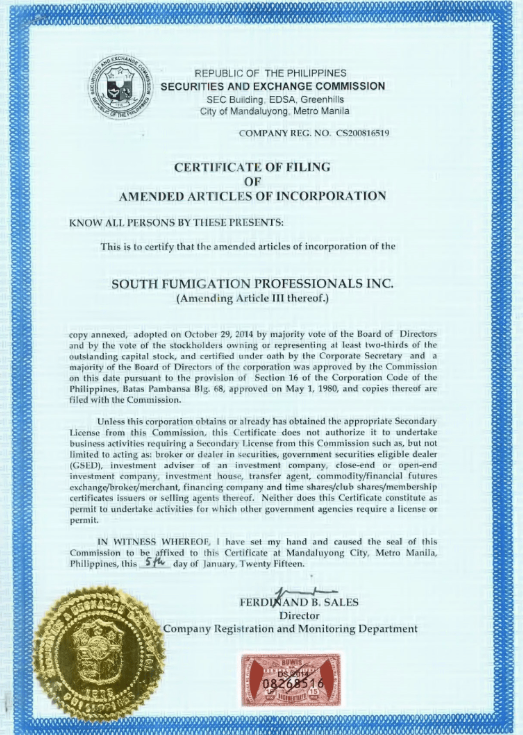
South Fumigation Professionals Inc. — licensed pest control and fumigation with compliance-ready documentation across Southern Luzon.
SFPI / OUR COMPANY
Company profile
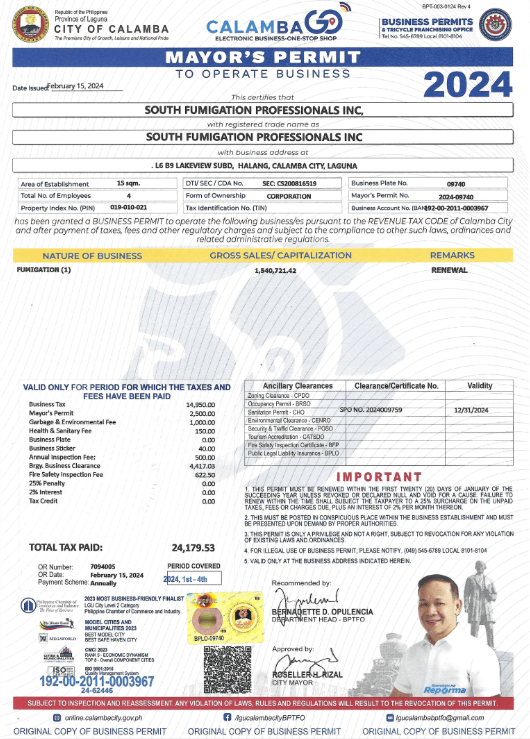
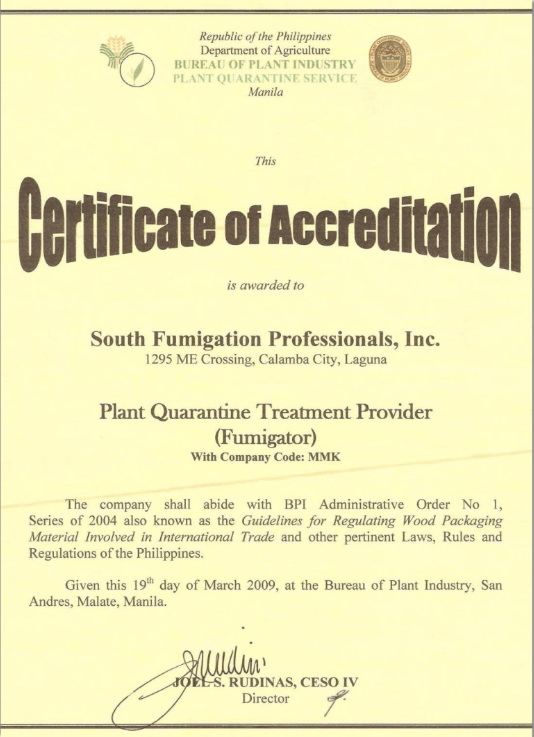
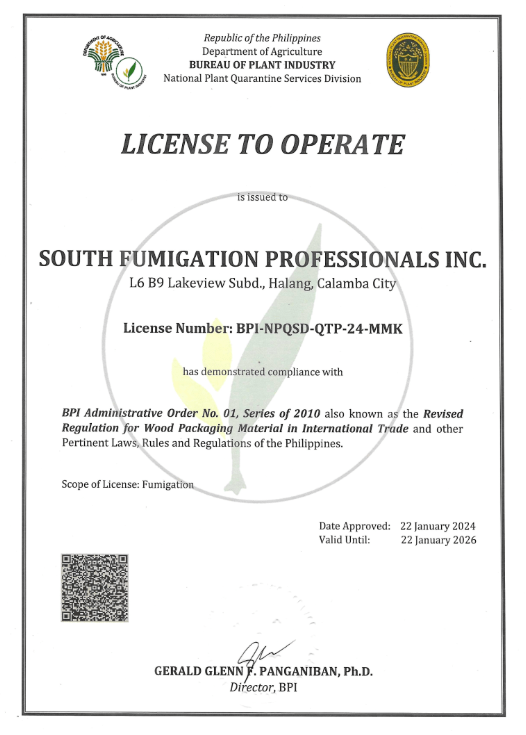
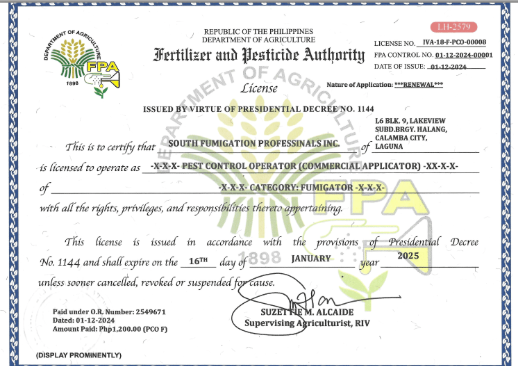
Licensed in Calamba City for structural and commodity protection—backed by FPA/BPI registration, IPPC/ISPM wood packaging authorization, and AFAS accreditation for Australia-bound cargo.
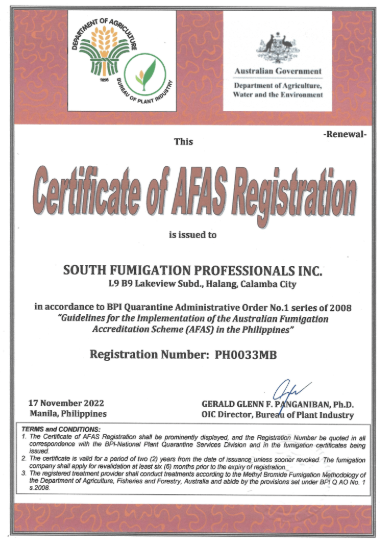
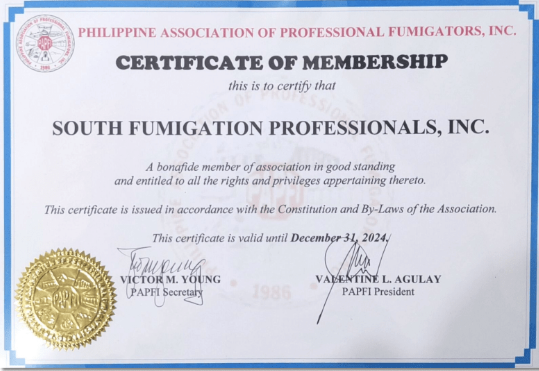
South Fumigation Professionals Inc. (SFPI) is a licensed pest control company based in Calamba City, Laguna. Specializing in termite elimination and general pest control services, SFPI is accredited by the Fertilizer and Pesticide Authority (FPA) and the Bureau of Plant Industry (BPI) in the Philippines. The company holds authorization for fumigating agricultural products and marking “Wood Packaging Materials (WPM)” in compliance with the International Plant Protection Convention (IPPC) and International Standards of Phytosanitary Measures (ISPM). Additionally, SFPI is accredited by the Australian Quarantine & Inspection Service (AQIS) under the Australian Fumigation Accreditation Scheme (AFAS), allowing them to fumigate products and packaging materials destined for Australia. SFPI is also a recognized member of the Philippine Association of Fumigators Inc. (PAPFI), Pest Control Association of the Philippines (PCAP), and Philippine Federation of Pest Management Operators’ Association Inc. (PFPMOA).
SFPI / HISTORY
Our Journey
-
Origins · 2002
Mr. Raymund J. Manaig, President of South Fumigation Professionals Inc. (SFPI), used a pest control company as his thesis during MBA study in year 2002. With more than 20 years of entrepreneurial experience on some small-sized businesses he manages and owns/co-owns while practicing the public accounting profession for clients belonging to various industries; decided to carry out his thesis into reality by establishing his own pest control company.
-
2008
Raymund J. Manaig (RJM) passed the CPA (Certified Pesticide Applicator—Fumigator Category) Licensure Examination. He organized the board of directors and completed SEC registration. RJM established affiliation with a major importer of Methyl Bromide and Aluminum Phosphide—the fumigants and tablets SFPI uses for pre-shipment work and crop produce.
-
2009
The company achieved a 100% passing rate in the August 2009 FPA Certified Pesticide Applicator—Fumigator Category examination. Four (4) CPAs participate actively in operations to uphold service quality.
-
2010
Mr. Raymund Manaig and Current Ramos passed the Australian Fumigation Accreditation Scheme (AFAS) examinations—another 100% passing rate. SFPI received its AFAS certificate on August 9, 2010.
-
2012
Marife Manaig passed the Accredited Responsible Care Officer (ARCO) examinations administered by the FPA.
-
2013
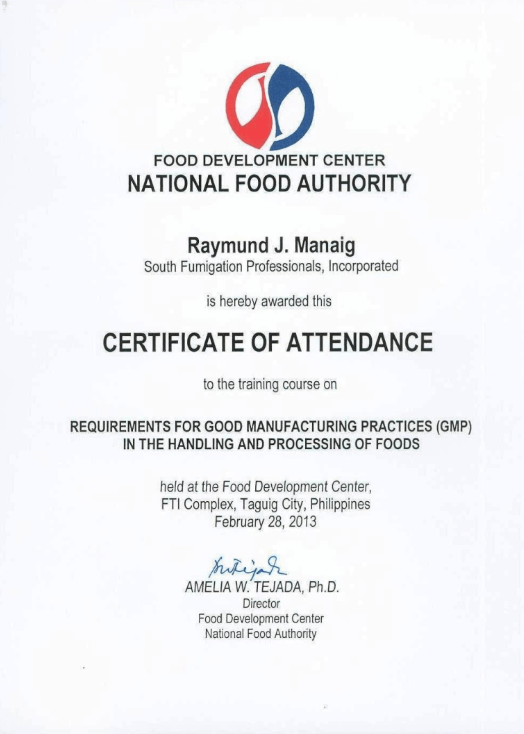
Raymund Manaig completed training in Good Manufacturing Practices (GMP) for food handling and processing, with a certificate of attendance on February 28, 2013, at the Food Development Center, National Food Authority, FTI Taguig, Metro Manila.
-
2022 – 2023
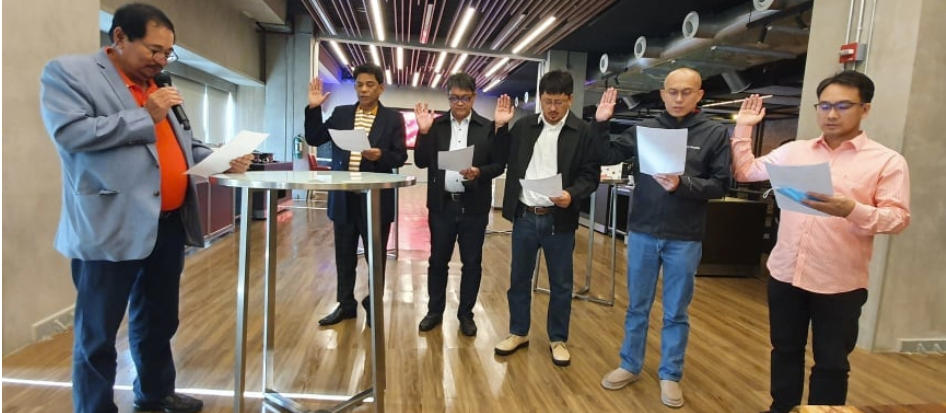
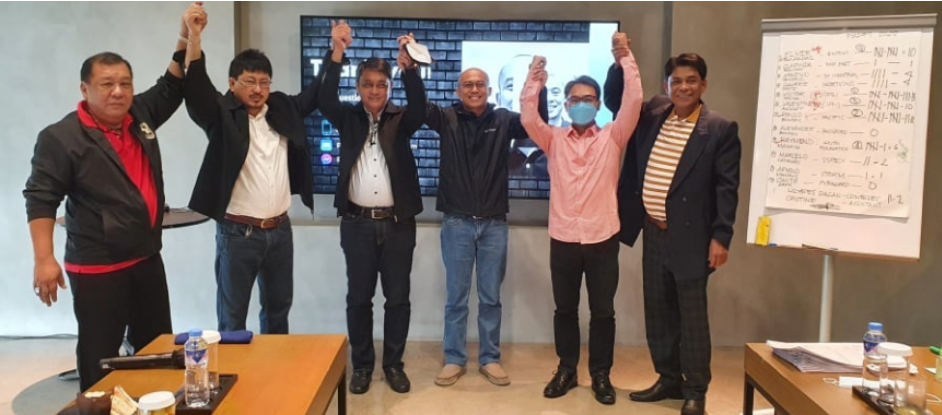
Mr. Raymund Manaig was appointed PAPFI Training Officer for the term 2022–2023.

SFPI / INDUSTRY AFFILIATIONS
Associations & Memberships
-
FPA · BPI
Accredited by the Fertilizer and Pesticide Authority and Bureau of Plant Industry.
-
IPPC / ISPM
Authorization for agricultural-product fumigation and WPM marking.
-
AQIS · AFAS
Australian Fumigation Accreditation Scheme for Australia-bound cargo.
-
PAPFI
Philippine Association of Professional Fumigators Inc.
-
PCAP
Pest Control Association of the Philippines.
-
PFPMOA
Philippine Federation of Pest Management Operators’ Association Inc.

SFPI / ORGANIZATION
Our Team
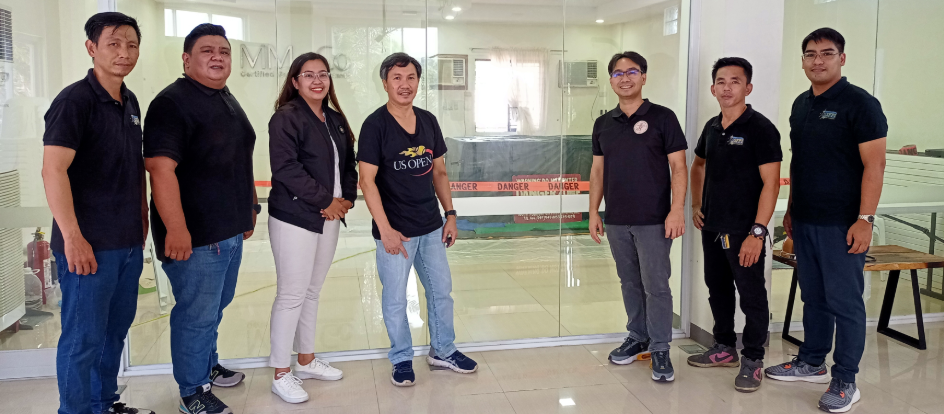
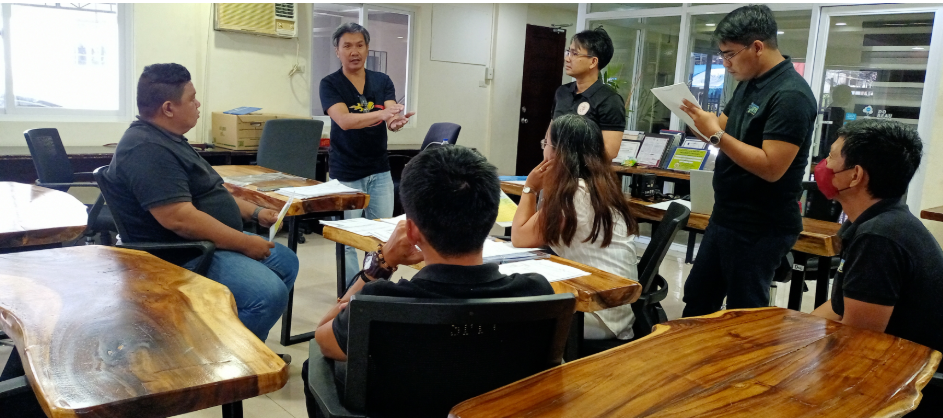
The company places emphasis on retaining individuals who exhibit traits of trustworthiness, reliability, dependability, and professionalism.
“Arrive at the client's site one hour prior to the scheduled service.”
With such a proactive approach, our technicians meticulously prepare in advance, prioritizing safety in every aspect of their work.
Board of Directors
- Raymund J. Manaig Chairman
- Florommel Manaig Vice President
- Pamela Manaig Member
- Marife C. Manaig Corporate Secretary
- Floro P. Manaig Treasurer
Management Team
- Raymund J. Manaig President
- Ma. Lourdes G. Manaig Consultant
- Enrique S. Regala Jr. Head Technician
- Archie E. Bagalanon Admin Staff
- Severo C. Tobias Technician
- Noel R. Negre Technician
SFPI / FAQ
Frequently
Asked Questions
Answers about fumigation, compliance, and treatment services.
The border lines may be solid or broken; and the corners may be rounded.
IPPC Certification symbol.
000: represents the unique certification number issued by AQIS to the treatment provider or wood packaging manufacturer. Inclusion of this certification number ensures that the wood packaging material can be traced back to the treatment provider and/or manufacturer.
YY – This indicates the type of treatment, and will either be HT (Heat Treatment) or MB (Methyl Bromide).
The marking ‘DB’ (indicating debarking has taken place) is no longer used. However, as pallets may last several years, the older style of ISPM15 marking is still permissible.
1. Cockroaches (German and American cockroaches)
2. Flies (house flies and blow flies)
3. Rodents (rats and mice)
4. Mosquitoes (especially Aedes aegypti)
5. Ants
Invertebrate pests
Crawling insects — cockroaches, ants, bedbugs, and variety of pests
Flying insects — a variety of flies, mosquitoes, moths and others that are frequently seen flying in houses and buildings
Vertebrate pests
Rodents
Birds
Snakes
Bats
Rodent Control Services
General Pest Control Services
Fogging Service
Mist Blowing
Spraying
Baits are available in the amount of set-up including meal, grains, pellets and blocks. Baits should be used in low passage, hard-to-reach spot such as subterranean vault, garage and upper floor. Baits are the best way to evade contact with rodents, because once they’ve eaten the bait, they leave the area to die, normally going outside to seek water. Baits are safe and very effective if used according to directions.
Traps are ideal for elevated traffic spot. Three types of traps are used commercially: snap traps, glue traps and live traps.
All technicians are “professional” and have understandings of the importance of punctuality.
All technicians drive clean, safe, and professional appearing vehicles.
All technicians render quick response service calls, usually within 24 hours of notification.